
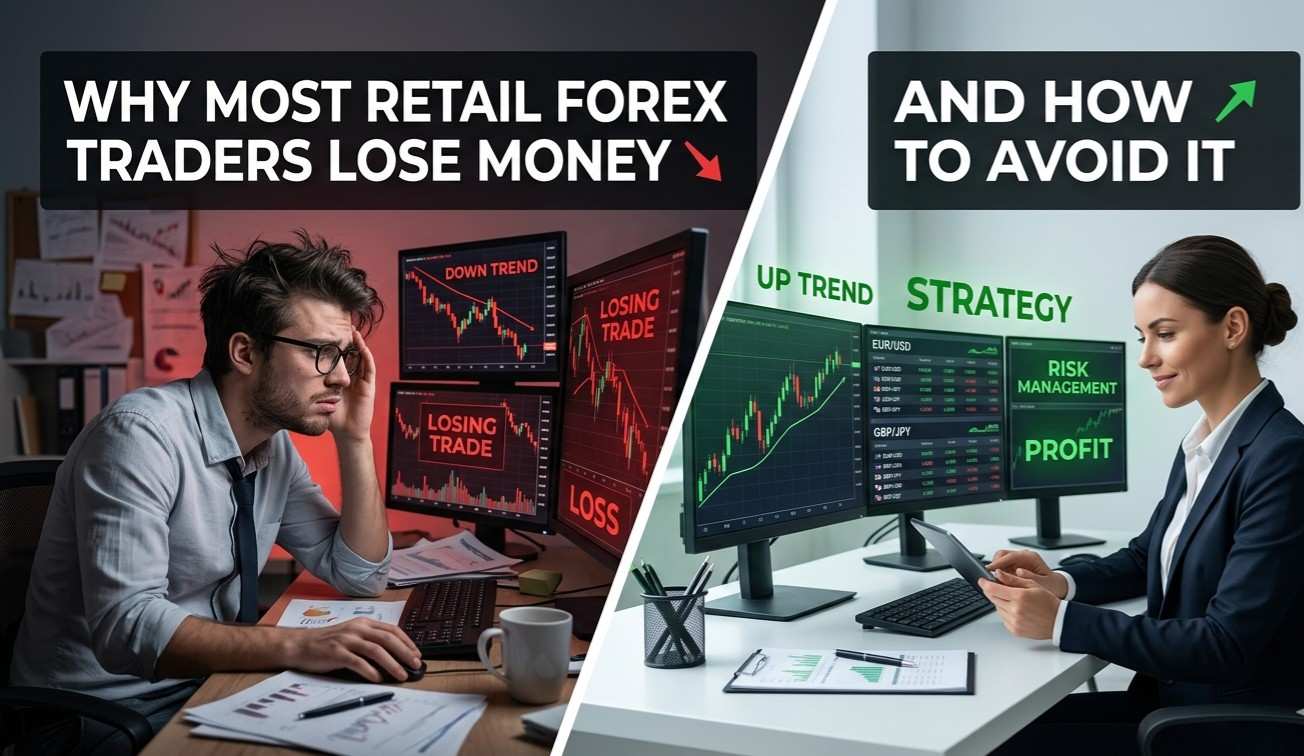
Let me gist you something that no one told me when I first entered forex. The market is not your enemy, but it will expose you if you don't plan well.
Every bad habit you have? It will bring it out.
Every weakness? It will amplify it.
Every shortcut mindset? It will punish it.
And the funny part? At the beginning, it won’t look dangerous. It will even encourage you a little. I remember my early days clearly. Fresh account. Clean charts. Big confidence. I came into the business like someone that had already “arrived.” One or two trades went well. I said, “ah… so this is how people are making money online.”
My brother, I didn’t know I had just entered the exam hall because forex has a way of giving you small wins early. Just to test whether you’re disciplined or just lucky. And most people fail that test.
The Real Reason Most Traders Lose
People love blaming strategy.
“It’s the indicator.”
“It’s the broker.”
“It’s manipulation.”
Relax. Those things exist, yes, but they’re not the main issue. The real problem is this:
Most traders don’t know what they’re doing but they think they do.
There’s a dangerous confidence that comes with partial knowledge. You understand support and resistance a little, you’ve seen a few YouTube videos, you can identify a trend sometimes. So you feel you are ready. But trading is not about “sometimes.” It’s about consistency and consistency is where everything breaks.
Overconfidence After Small Wins
This one is deadly. You win two trade, maybe three. Now your confidence rises. Not based on skill but results.
You increase your lot size.
You take trades faster.
You stop thinking deeply.
Then the market corrects you.
I’ve seen accounts grow quickly and disappear even faster. Not because the trader was unlucky, but because they believed early success meant mastery.
No Plan, Just Vibes
Let’s call it what it is. Most traders are guessing. They don’t have a defined entry, no clear exit, no structure. They open a trade because:
“It looks like it will go up.”
What does that even mean?
A proper trader knows exactly:
Why they are entering.
Where they are wrong.
Where they are taking profit.
If you can’t explain your trade in simple terms, you’re gambling.
The Stop Loss Problem
This one is not even technical again, it’s emotional. Nobody likes being wrong. So what do traders do? They avoid setting stop loss or they move it or they remove it completely.
“I’ll manage it.” that's their famous last words.
I’ve done it before. I had watched a small loss turn into something very painful and the worst part? Deep down, I knew I was wrong early, but ego said, “give it time.”
Overtrading Like Your Life Depends on It
Some traders can’t sit still. If the chart moves, they must act. It’s like an addiction. You feel like if you’re not in a trade, you’re missing something. But here’s the truth:
The market rewards patience, not activity.
Sometimes the best trade is no trade, but that requires discipline and discipline is not exciting.
Chasing Signals Like It’s Free Money
Let’s talk about signals. I am talking about the telegram groups, the discord alerts. “Buy now.” “Sell now.”
It feels easy, it's just to follow instructions. But here’s the problem. You’re not learning anything.
When it wins—you’re happy.
When it loses—you’re confused.
Because you don’t understand the logic behind it. So, you jump from one signal group to another hoping the next one will be “the one.” Meanwhile, nothing is changing.
Emotional Trading
This is where most traders lose the war. Fear makes you close early. Greed makes you stay too long. Impatience makes you enter too fast and all these things happen within seconds. I’ve entered trades I knew were not clean setups just because I didn’t want to “miss out.”
That’s not strategy..That’s FOMO and FOMO is expensive.
Build a Plan You Can Actually Follow
Forget complicated strategies, forget trying to look like a “pro.”
Your plan should be simple enough that you can follow it even when you’re emotional. Define your setup clearly. What exactly are you waiting for? Not “something clean.”.Be specific because under pressure, vague plans collapse.
Risk Small, Stay Alive
Let me put it like this. If your account dies, your trading career dies with it. So protect it. Risk small percentages per trade, even if it feels slow because survival is more important than speed.
You don’t need one big win, you need many small, controlled decisions.
Trade Less
This one is hard for many people. You feel like trading more means earning more. But in reality, trading less improves your quality.
You wait more.
You think more.
You choose better.
And your results reflect that.
Accept That Losses Are Part of the Game
This mindset alone can save you. You will lose trades, even good ones. That doesn’t mean your strategy is bad. It doesn’t mean you’re failing. It just means you’re trading. Once you accept that, you stop reacting emotionally.
Focus on Process, Not Money
This one is deep. If your focus is only money, every loss hurts more. Every win excites you too much. You become unstable, but if your focus is process, following your rules, and executing your plan. Then results become more consistent and consistency brings money.
One Truth I Had to Accept
Let me be honest with you. The market didn’t change when I started improving because it's the same charts, same movements and the same setups. But my mindset was different. My discipline was stronger and my decisions were clearer. That’s when things started making sense.
Final Gist
Most retail traders don’t lose because forex is impossible. They lose because they approach it casually.
Too much emotion.
Too little structure.
Too much expectation.
Too little patience.
If you can fix those things, even gradually, you won’t just survive this game. You’ll grow in it. Not overnight, not magically, but steadily. And in trading, that’s the only kind of growth that actually lasts.