
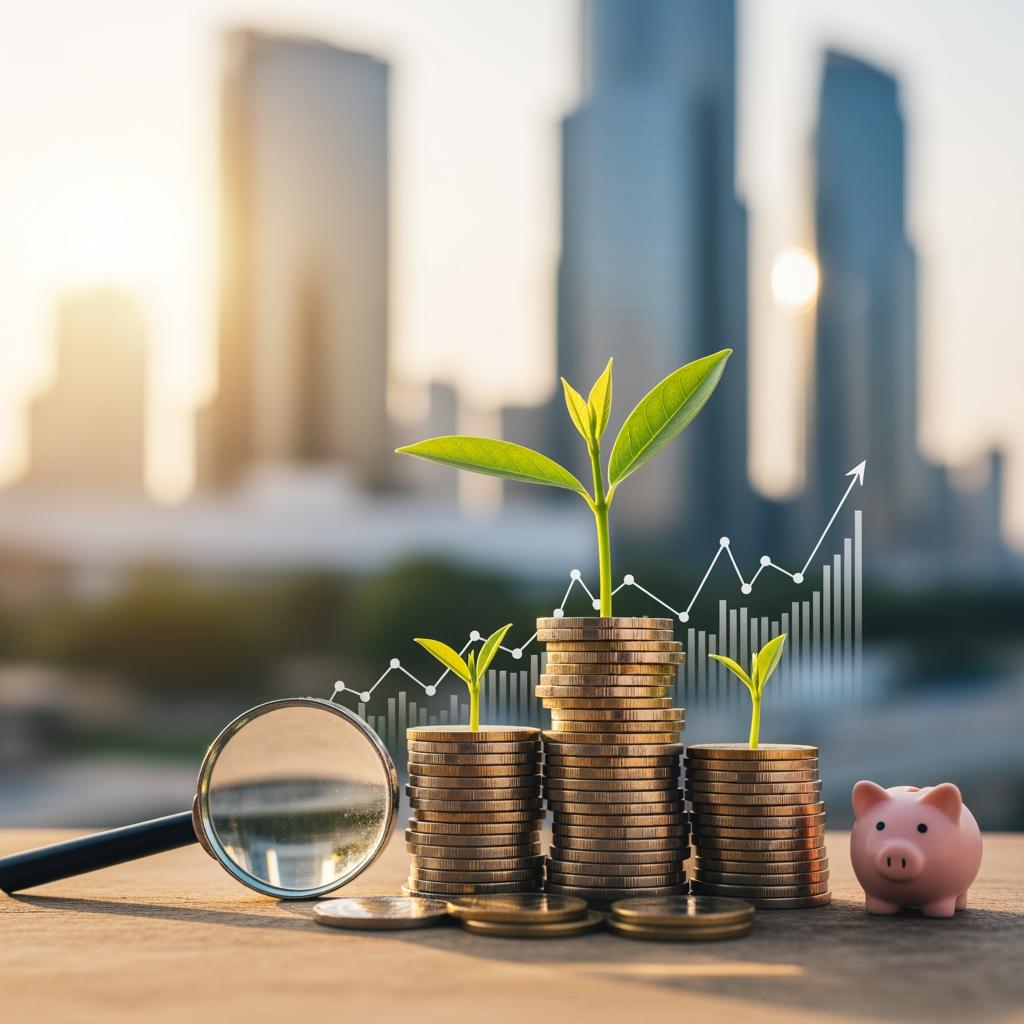
Let me tell you something, many people will never admit out loud: most of us didn’t grow up with a silver spoon. Some of us didn’t even grow up with a spoon at all. Yet, somehow, the world keeps telling us, “Invest! Invest! Invest!” as if everyone has millions lying casually under their mattress.
But here’s the truth nobody told you early enough: you don’t need big money to start investing. What you need is mindset, consistency, and a little courage to put your money where your future is.
You see, investing isn’t for rich people, investing is how people become rich.
And in 2025, the game has changed completely. The old barriers are gone. The big boys no longer own the playground. This is the year where someone with $10 can start building what their parents needed $10,000 for.
So if you’ve been hesitating, overthinking, or waiting for “the perfect moment,” let’s settle that today. Because the perfect moment is the one where you decide you’re tired of being financially stagnant.
Let’s break it down like we’re sitting in a small café, sharing cold drinks, talking about money, life, and how to secure your future with what you already have.
Why People Think They Need Big Money to Invest
Somewhere along the line, society made investing look like a luxury. Like something reserved for CEOs wearing Italian suits and using words like “portfolio diversification” before breakfast. Even Hollywood helped fuel this lie, showing traders shouting on Wall Street, flipping millions like it’s small change.
So regular people assume:
“I’ll start investing when I earn more.”
“My salary is too small.”
“I don’t want to lose the little I have.”
But let me shock you a little: the biggest risk is not investing at all.
Money sitting idle is money losing value. Inflation does not respect anybody. It doesn’t care whether you're in Lagos, London, Los Angeles, Toronto or Sydney. Every year, your money becomes weaker unless you put it to work. And the people who get ahead? They’re not the ones earning the most, they’re the ones investing the earliest.
Even if it’s just $5.
Mindset First: Stop Thinking “Small Money” Is Useless
Let me paint a picture for you.
Imagine you start investing $20 every week. That’s roughly the price of a cheap meal in many countries, or a couple of Uber rides, or a night of impulse shopping you won’t even remember tomorrow.
At the end of the year, that $20 habit turns into $1,040.
Now imagine that same amount compounding for five years. Ten years. Twenty years.
Do you now see why the wealthy always say, “It’s not how much you earn, it’s how much you keep and grow”?
Even Warren Buffett started investing with little money. Today he’s one of the richest men in the world, yet he still preaches the same gospel:
Start early. Start small. Let time do the magic.
So remove that shame. Remove that fear. Remove the mindset that makes you feel your money is too small to matter.
Where You Can Start Investing With Very Little Money
Now, let’s get practical. You don’t need a degree in finance. You don’t need huge capital. You don’t even need to understand everything at once. You just need to begin.
Here are the simplest entry points, explained naturally, without overwhelming jargon.
1. Fractional Stocks
In today’s world, you don’t have to buy a whole share. If Apple stock costs $150 and you have only $10, you can buy $10 worth of Apple. Same with Tesla, Amazon, Nvidia, whatever you like. It’s like buying a slice of pizza instead of the whole box.
Platforms in the US, UK, Canada, Australia, and even some African countries offer fractional investing. The beauty? You get all the benefits of owning the stock, with none of the pressure of buying it in full.
2. ETFs
ETFs (exchange-traded funds) are like having a basket instead of one fruit. Instead of betting on one company, you invest in many at once. Your risk spreads. Your stress reduces. Your long-term potential increases.
People who don’t want to be checking charts every morning love ETFs because they are simple, stable, and steady.
3. High-Yield Savings & Money Market Funds
This is not “investment” in the big-money sense, but it’s a powerful beginning. Interest grows quietly. Your money gains strength instead of dust. Some countries have funds that allow you to start with as little as $10 or $20.
4. Micro-Investing Apps
These apps round up your spare change and invest it for you. If you spend $4.50 on something, the app puts the remaining 50 cents into investments. It’s like sneaking vegetables into your food, you’re eating well without even noticing.
5. Retirement Accounts
If you live in a Tier 1 country, retirement accounts like Roth IRAs and 401(k)s are your ticket to long-term wealth. Why? Because they offer tax advantages.
Taxes saved = money earned.
You can start with tiny contributions and over time, it grows into something your future self will thank you for.
The Mistake Most Beginners Make (And How to Avoid It)
Here’s something many people won’t tell you: new investors usually lose money not because they invested, but because they panicked. They buy when the market is high and emotional. They sell when the market is low and confusing.
Then they swear off investing forever. But here’s the truth: the market moves like life. It's up today, down tomorrow, calm next week, dramatic the week after. If you jump out every time things look rough, you will always lose.
You win by staying long enough for things to stabilize. Think of investing like planting a mango tree. If you dig it up every week to check if it’s growing, it won’t grow. But if you water it, protect it, and give it time, one day the whole neighborhood will be eating mangoes from your compound. Patience pays more than intelligence in investing.
What to Invest According to Your Personality
You see, investing is not one-size-fits-all. Know yourself before you put your money anywhere. If you hate stress, consider safer, slow-growth assets like ETFs or government bonds.
If you enjoy research and have a bit of risk tolerance, individual stocks may fit you.
If you're young and have time on your side, you can allow yourself a little volatility. If you're older, you may prefer stability. The goal is not to invest like your friend or mentor. The goal is to invest in a way that lets you sleep at night.
How to Invest Consistently (Even When Money Is Tight)
Let me be honest with you: consistent investing is easier when you automate it. If you rely on “remembering” to invest, life will distract you. Bills will distract you. Human nature will distract you.
But when you automate, the money leaves your account quietly before you even see it. You’re not trying to be disciplined. You're designing your environment to make discipline automatic.
Think about it like fitness. If chips are in your house, you will eat chips. If apples are in your house, you will eat apples. Your environment shapes your behavior. Set your investing on autopilot, even if it's $10 a week and watch how your future forms itself.
Why Starting Small Makes You Smarter
Most people don’t realize that investing small amounts helps you learn without fear.
You observe the market. You understand your emotions. You discover your investing style. You make small mistakes that won’t break you. You start recognizing opportunities.
Starting small is like riding a bicycle with training wheels. You’re building competence. And once competence comes, confidence follows. Before you know it, you’ll be handling bigger investments with boldness.
Don’t Compare Your Investment Journey to Anyone Else’s
Comparison is the thief of financial peace. Some people start early because they had supportive parents. Some start late because they had tough beginnings. Some earn a lot. Some earn very little. Some have dependents. Some don’t.
Every financial journey is unique.
You are not late. Your money is not too small. You are not behind.
The only way to lose is to never begin.
The goal is not to compete, the goal is to grow.
Where Your Future Wealth Actually Comes From
Let me tell you a secret wealthy people know but rarely say out loud:
Your future wealth will not come from one big investment. It will come from many tiny decisions made consistently over years.
The decision to save before you spend. The decision to invest a small amount regularly. The decision to learn. The decision to keep going even when the market dips. The decision to think long-term. The decision to delay gratification. The decision to automate your contributions. The decision to trust the process.
These tiny decisions compound just like money does. If you improve your financial habits by just 1% every month, your wealth will grow 100% faster than someone who keeps chasing shortcuts.
A Simple, Gentle Roadmap to Follow
Start with what you have. Choose one investment type to begin with. Put a small amount, however small into it consistently. Add more later when your income increases. Resist the urge to panic when markets fluctuate. Avoid checking your portfolio every morning like a blood pressure monitor.
Learn gradually.
Stay long-term.
Increase your contributions when life becomes more stable.
Keep going.
This is how ordinary people become financially free.
The Part You Don’t Want to Hear (But Need to)
Investing is not magic. It won’t change your life in one week. It won’t double your money in one month. It won’t make you rich overnight.
And that’s exactly why it works because the impatient people quit. The greedy ones fall for scams. The emotional ones make poor decisions. The arrogant ones lose big.
But the consistent ones? They win quietly. Slow, steady, stable wins over time. Your investment journey is a marathon with no competitor, just you and your future.
A Final Word for You
Let me end with this thought: If your future self could speak to you right now, they would say:
“Thank you for starting. Thank you for not giving up. Thank you for using what you had, not waiting for what you wished for.”
Investing is you sending money into your future, like a time capsule filled with hope. Start where you are. Start with what you have. Start now because one day, years from today, you’ll look at your growing wealth and whisper to yourself: “I’m glad I didn’t wait.”